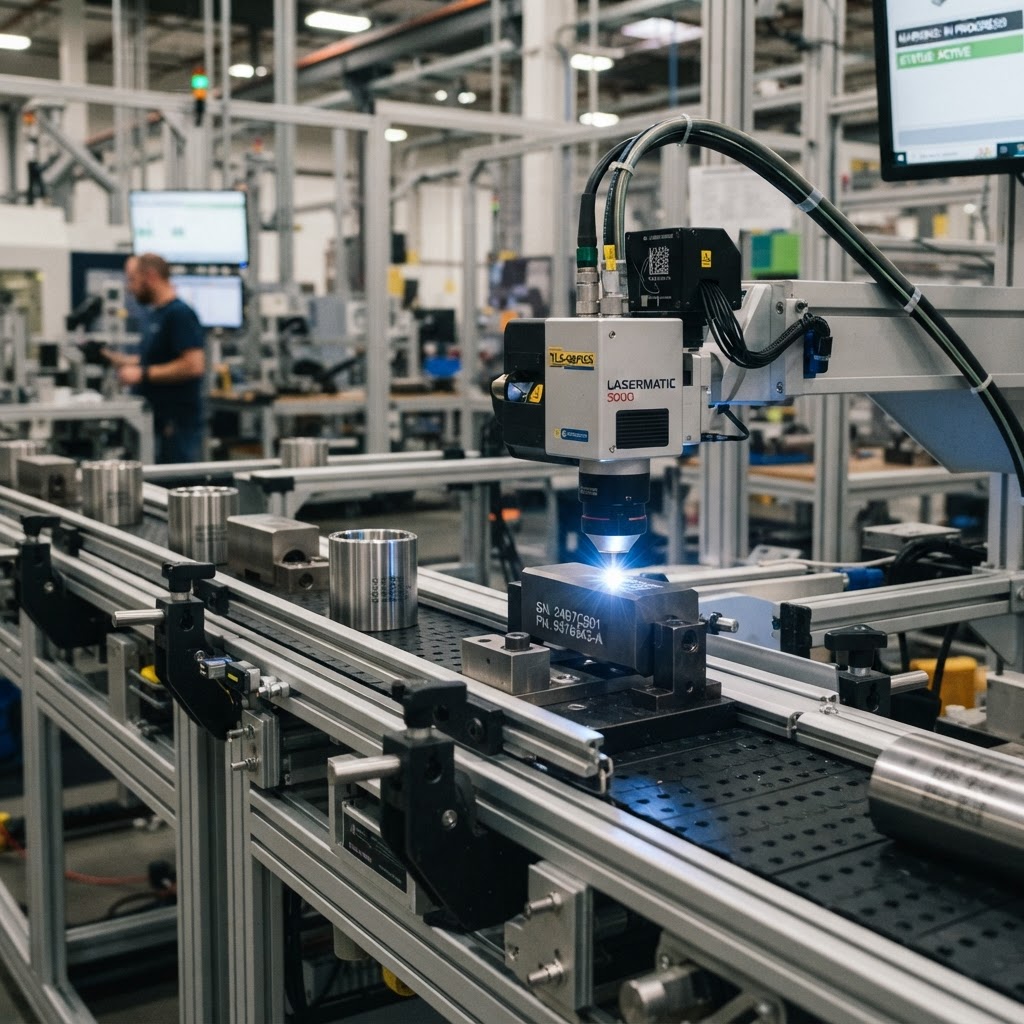
Traceability in Manufacturing: Why Every Metal Part Needs a Permanent Mark
Need this made for your team?
Send your artwork or idea and we will come back with a price in one business day. Bulk pricing available.
Ever spent three hours hunting for a specific part in a cluttered warehouse only to realize you have no idea who made it or if it is even the right spec? It is a nightmare scenario for anyone running a shop. Whether you are building components for aerospace, medical devices, or just custom brackets for a local project here in New Braunfels, losing track of your inventory is a fast way to lose money.
We see this all the time at Perfect Etch. A client comes in with a box of metal components, looking for a way to make sense of the chaos. They have realized that guessing is not a business strategy. That is where professional industrial traceability engraving changes the game. It is not just about slapping a logo on something. It is about creating a permanent record that lives right on the metal.
Why a Sharpie Just Does Not Cut It
Look, I get it. You have got a label maker or a permanent marker sitting on your workbench. It feels quick. It feels cheap. But if you have ever tried to track a part that has been through an oil bath, a high heat cycle, or just a few months of sitting on a dusty shelf in Central Texas, you know those labels fall off or smudge into oblivion.
Manufacturing identification requires something that survives the actual life of the part. When we use our laser systems to mark a component, we are not putting ink on the surface. We are altering the material itself. Whether we are annealing stainless steel to leave a black mark that is flush with the surface or deep etching into aluminum, that mark is there as long as the metal is.
If you are dealing with liability or quality control, you need to know exactly when a part was produced, which batch of raw material was used, and who signed off on the QC check. Without metal part serialization, you are essentially flying blind. If a failure happens, you are stuck tracing back through mountains of paperwork instead of just scanning a QR code or reading a serial number right off the steel.
The Reality of Metal Part Serialization
Here is the thing about serialization. It forces your shop to be disciplined. You cannot just throw random parts into a bin and call it a day. You have to think about your workflow. We work with machine shops all over the Texas Hill Country, and the ones that succeed are the ones that treat marking as a core part of their process rather than an afterthought.
I usually tell folks to start small. You do not need to engrave a novel on every single washer. You need a clean, legible sequence. Maybe it is a date code or a simple numeric string. We have seen projects where a simple shift code saves a manufacturer from recalling thousands of parts because they could pinpoint the exact three hour window where a machine calibration might have drifted. That is not just engraving. That is risk management.
When you bring your parts to us, we think about the placement. Does that part go into a hydraulic press? If so, we are not going to mark it in an area that creates a stress riser. We want your parts to stay functional and look professional. Honestly, there is something satisfying about a perfectly marked part. It tells your customer that you care about your work. It says you are proud of what you produced and you are willing to stand behind it.
Avoiding the Common Traps
One mistake we see often is people trying to mark parts after they have been coated or plated. If you anodize a part and then try to mark it, you are burning through that protective layer. That is an invitation for rust or corrosion.
Usually, the best approach is to plan the marking early. If you talk to us while you are still in the prototype phase, we can help you figure out the best spot to place the serial numbers or logos. We can even help you decide between a data matrix code, which stores a ton of info in a small square, or a simple alphanumeric code that anyone can read at a glance.
We have a shop right here in New Braunfels, and we love helping local companies bridge the gap between rough metal and a finished, professional product. We have seen projects go from "we think this might work" to "this is a certified, traceable component" just by adding a bit of laser precision. It changes how your customers perceive your brand. When they see a clean, consistent mark on your metal signs or industrial parts, they know they are working with a shop that keeps their act together.
Getting It Done Right
At the end of the day, part traceability marking is about peace of mind. It is about knowing that if a client calls you a year from now asking about a specific gear or plate, you can tell them exactly what it is.
We are not just a laser shop. We are a partner in your production flow. Whether you need a thousand serial numbers engraved on stainless steel or you need your company logo marked on a custom metal sign for the front office, the process should be simple. You bring the parts, we talk through the depth and the contrast, and we get it done on time.
If you have been struggling to keep track of your inventory or you are ready to add that final touch of professionalism to your manufactured goods, stop by the shop or give us a shout. We would love to take a look at your parts and see how we can make them easier to track and harder to lose. Let us help you put a permanent stamp on your hard work.
Tell us about your project
Share the basics and we will come back with pricing, options and a timeline. No obligation.