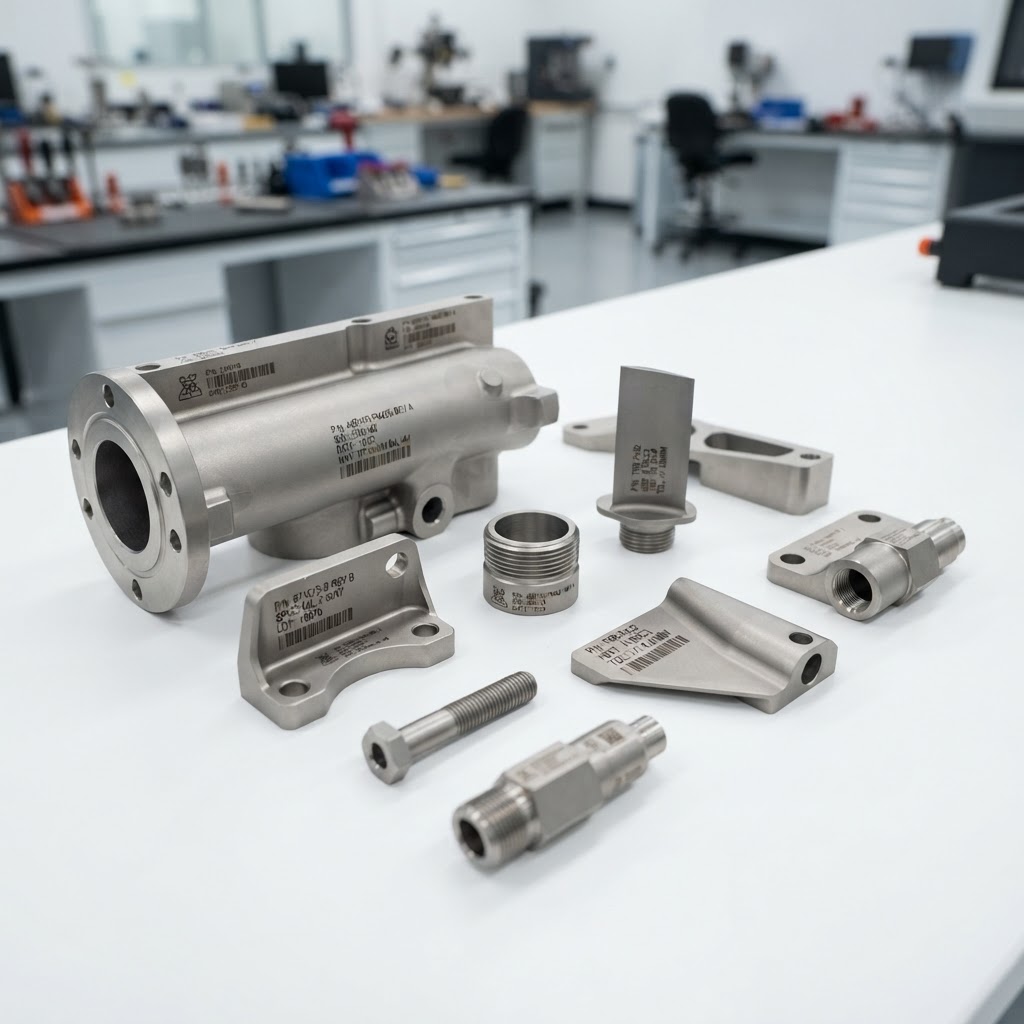
Engraving Titanium Parts: What Aerospace and Medical Shops Know
Need this made for your team?
Send your artwork or idea and we will come back with a price in one business day. Bulk pricing available.
If you have ever tried to scratch a mark onto a piece of titanium with a traditional carbide tool, you know exactly why people get frustrated. Titanium is tough. It is stubborn. It is the metal equivalent of that one friend who refuses to budge during an argument. Down here at Perfect Etch in New Braunfels, we see parts come through our shop that have seen everything from high altitude flight to delicate surgical procedures. The people who make these parts in the aerospace and medical industries know something that the rest of the world is just starting to figure out. You cannot just throw any old laser at titanium and expect it to look professional.
The secret behind the color and the contrast
Titanium is a fascinating metal to work with because it reacts to heat in a way that almost feels like magic. When we talk about titanium laser marking, we are not always talking about digging a deep trench into the material. In fact, if you go too deep, you might actually compromise the structural integrity of a sensitive aerospace bracket or a medical screw. That is the last thing anyone wants. Instead, we use a process called annealing.
By carefully controlling the heat from our laser, we can change the oxide layer on the surface of the metal. This allows us to create marks that are high contrast, durable, and completely smooth to the touch. This is a massive deal for medical device marking. If a surgical instrument has a jagged or rough serial number, it becomes a magnet for bacteria. That is a non-starter in a sterile environment. Aerospace engineers love this process too because it provides a permanent mark that will not flake off or fill up with grease, all without having to mill away precious material. It is clean, it is precise, and honestly, it looks pretty sharp against the natural finish of the metal.
Why precision matters more than power
You might be tempted to think that cranking the laser power to the maximum setting is the best way to handle titanium. Here is the thing. That is a recipe for disaster. Titanium conducts heat differently than stainless steel or aluminum. If you dump too much energy into one spot, you can warp the part or create what we call a heat affected zone. That discoloration can ruin a precision component.
We have spent years dialing in our equipment here in Central Texas to find that sweet spot. It is all about the pulse frequency and the speed. We keep our settings tight. When we are working on a batch of medical pins, we are measuring our tolerances in microns. If we are off by just a hair, the mark might be too light to read under a microscope or too deep for the safety specs. You have to respect the metal. It is not about speed at the expense of quality. It is about understanding the chemistry of the material you are hitting with that beam.
Avoiding the common pitfalls of marking
One of the biggest mistakes we see shops make when they try to DIY their engraving is assuming that titanium will always behave the same way. It does not. Depending on the grade, titanium can be tricky. Grade 5 titanium, for example, is much harder to mark than commercially pure grades. If you do not adjust your focal length and your beam diameter, you will end up with a blurry mark that looks like it was done in a dark room.
Look, we have seen parts come into Perfect Etch where someone tried to use a standard fiber laser without the right lens setup. The mark was gray, faded, and honestly, it looked unprofessional. In the aerospace world, a serial number that fades after a few flight cycles is a failure. You want a mark that can withstand intense vibration, extreme temperature swings, and chemical cleaning agents. We treat every single part like it is going into an engine that needs to run for twenty years. That means checking our focus before every single run and ensuring our exhaust system is pulling away any microscopic titanium dust. It keeps our shop clean and it keeps the parts pristine.
Customizing your gear with the same tech
While our heavy lifting often involves industrial parts for big contractors, the technology we use is the same stuff we apply to our local projects here in New Braunfels. We take that same aerospace level of care when we are engraving custom drinkware or heavy duty metal signs. When you bring us a stainless steel tumbler or a custom plate for your workshop, you are getting the benefit of our experience with these difficult metals. We do not just slap a logo on something and call it a day. We look at the material and decide exactly how the laser should behave to make that design pop.
Whether it is a serialized part that needs to be legible after a decade in the field or a metal sign that needs to look clean for your front office, the process remains the same. It is about control. It is about knowing that the laser is a tool for transformation, not just destruction. Titanium is a high performance material, so it deserves a high performance finish. We enjoy the challenge of working with the hard stuff because it forces us to be better at our craft.
If you have a project that involves titanium or any other tricky metal, and you want to make sure it is handled with the precision it deserves, feel free to stop by the shop. We are always around to chat about your next project, look at your drawings, or just show you some samples of what we have been working on lately. We would love to help you get your parts marked exactly the way they need to be.
Tell us about your project
Share the basics and we will come back with pricing, options and a timeline. No obligation.