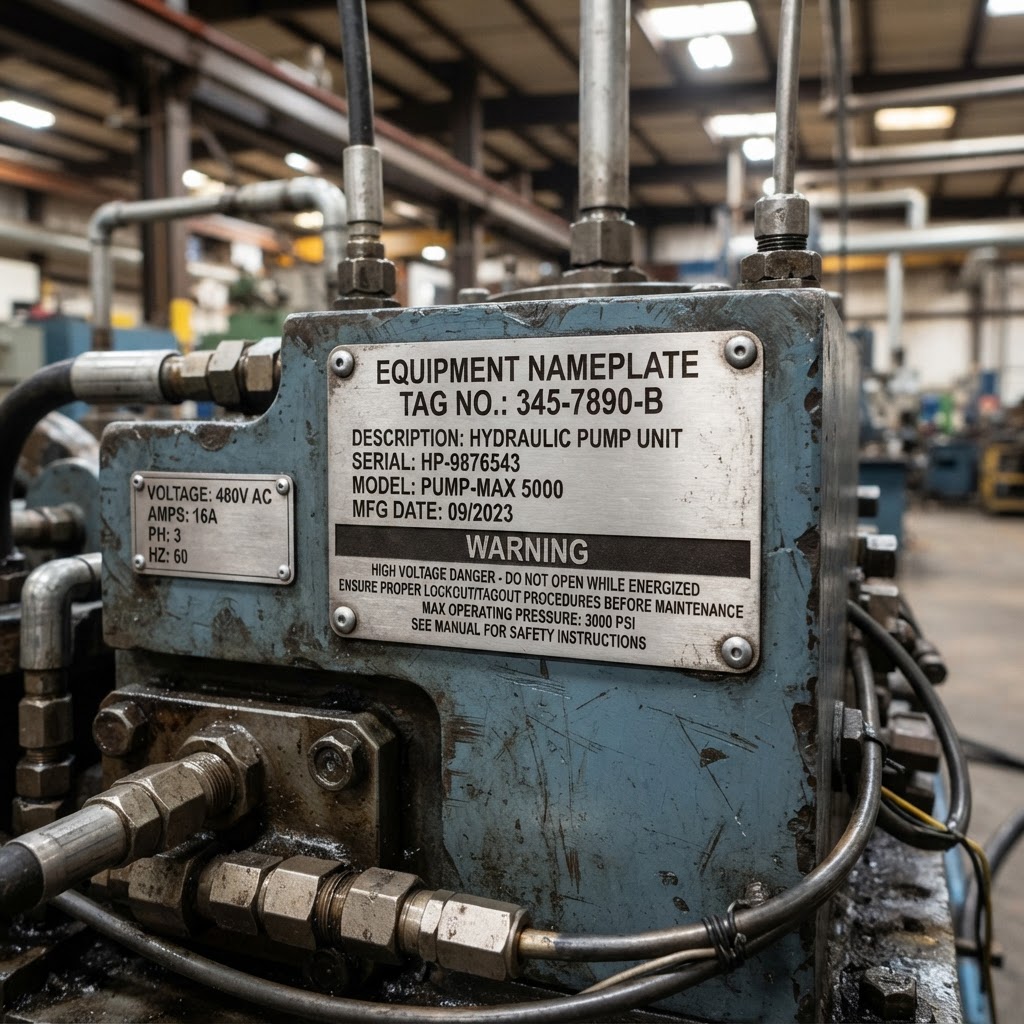
Engraved Metal Tags for Industrial Equipment: A Practical Guide
Need this made for your team?
Send your artwork or idea and we will come back with a price in one business day. Bulk pricing available.
I still remember a guy walking into our shop here in New Braunfels with a piece of machinery that looked like it had been through a war. It was caked in grime and oil, and he was holding a tiny, faded plastic sticker that had peeled off halfway. He told me he had spent three hours that morning trying to track down a serial number just so he could order a replacement part for a motor. He was frustrated, and honestly, I got it. When your equipment identification plates turn into unreadable ghosts, your workflow hits a wall.
That is exactly why we spend so much time at Perfect Etch working on engraved metal equipment tags. If you are running a shop or managing a fleet of heavy machinery in Central Texas, you know that plastic labels do not stand a chance. Between the heat, the chemicals, and the general wear and tear of industrial work, those stickers are doomed from day one. You need something that stays put and stays readable for the long haul.
Why metal is the only way to go
Look, I have seen a lot of things fail under pressure. Paper labels rot, vinyl decals blister in the sun, and printed markers fade away when they get hit with solvent. Industrial metal tags are built differently. When we use our laser systems to mark stainless steel or aluminum, we are not just printing a surface layer that will scrub off. We are actually changing the surface of the metal itself.
Whether we are talking about stainless steel or anodized aluminum, the mark we make is essentially permanent. If a technician needs to read a voltage rating or a serial number five years from now, that engraving is going to be there. It does not matter if the equipment is sitting in a dusty warehouse or out in a field in the middle of a Texas summer. It is not going to peel, and it is definitely not going to wash away.
Picking the right material for your gear
You might think any old piece of metal will work, but that is not quite right. We usually steer our local clients toward 304 or 316 stainless steel if the equipment is going to be exposed to harsh environments. If you are dealing with food processing or offshore gear where salt and moisture are constant, 316 is your best friend because of its resistance to corrosion.
For general indoor use or lighter equipment, anodized aluminum is a fantastic choice. It is lightweight, cost effective, and looks sharp. The laser process on anodized aluminum is actually pretty cool because it removes the color from the top layer of the coating, leaving a crisp and high contrast mark that stands out against the background. It is clean, professional, and stays legible through years of hard use.
Getting the details right
The biggest mistake I see people make is trying to cram too much information onto a tiny tag. I tell people all the time that less is more. Stick to the essentials. You need the model number, the serial number, the manufacture date, and maybe a warning if there is a serious safety risk. Keep the font size large enough that a person can read it without needing a magnifying glass while they are standing in a cramped maintenance closet.
We usually recommend a bold, sans serif font. It cuts through the visual noise better than anything else. If you have a logo that you want included, we can handle that too. It adds a bit of professional polish to your equipment and makes it clear who owns the gear if it ever gets misplaced. Just keep it simple. If the important data is crowded by a giant logo, you are going to regret it the moment you need that info in a hurry.
How to mount your tags for the long run
Even the best engraved metal tag is only as good as its mounting method. If you use cheap adhesive, the tag will end up on the shop floor while the machine keeps chugging along. We always suggest mechanical fasteners whenever possible. If you can use screws or pop rivets, do it. It keeps the tag locked down tight.
If you absolutely have to use adhesive, go with a high bond industrial tape designed for metal surfaces. Make sure the surface is squeaky clean before you stick it on. Use a bit of degreaser and wipe it down with isopropyl alcohol. I have seen perfectly good tags fall off simply because there was a microscopic layer of oil on the surface of the machine. Taking that extra minute to clean the metal makes all the difference in the world.
Why local matters
Being right here in New Braunfels means we get to see how our work holds up in the local environment. We know what the humidity does to metal and we know how the dust around here can get into everything. We are not some giant faceless company shipping thousands of generic tags from halfway across the world. When you come into our shop, we look at the actual item you need to tag. We talk about the environment it lives in and we choose the material and the marking depth that makes sense for your specific situation.
We take pride in knowing that the metal nameplate engraving we do for a local manufacturer is going to be there for years. It is about reliability. You have enough to worry about with your daily operations, and you should not have to spend your time worrying about whether your equipment identification plates are going to stay attached or readable.
If you have a project coming up or you are tired of dealing with labels that fall off every six months, feel free to stop by the shop. We can take a look at what you are working on and figure out the best way to get it labeled for good. You can give us a shout or just drop by to see some of the stuff we have been working on lately. We are always happy to chat about how to make your equipment look professional and stay organized.
Tell us about your project
Share the basics and we will come back with pricing, options and a timeline. No obligation.