Anneal Marking vs Engrave Marking: Choosing the Right Process for Metal Parts
Need this made for your team?
Send your artwork or idea and we will come back with a price in one business day. Bulk pricing available.
I had a customer walk into our shop here in New Braunfels the other day holding a handful of stainless steel components. He looked a bit frustrated. He had already tried a few different marking services, and his parts were either coming back with deep, rough grooves that made them hard to clean or the markings were fading after just a few weeks on the factory floor. He looked at me and asked the million dollar question. Why is it so hard to get a permanent mark on metal without ruining the finish.
That is exactly why we need to talk about the difference between laser engraving and anneal marking. They are not the same thing, and choosing the wrong one is usually why parts end up looking like garbage or failing your quality control checks.
The truth about deep cuts
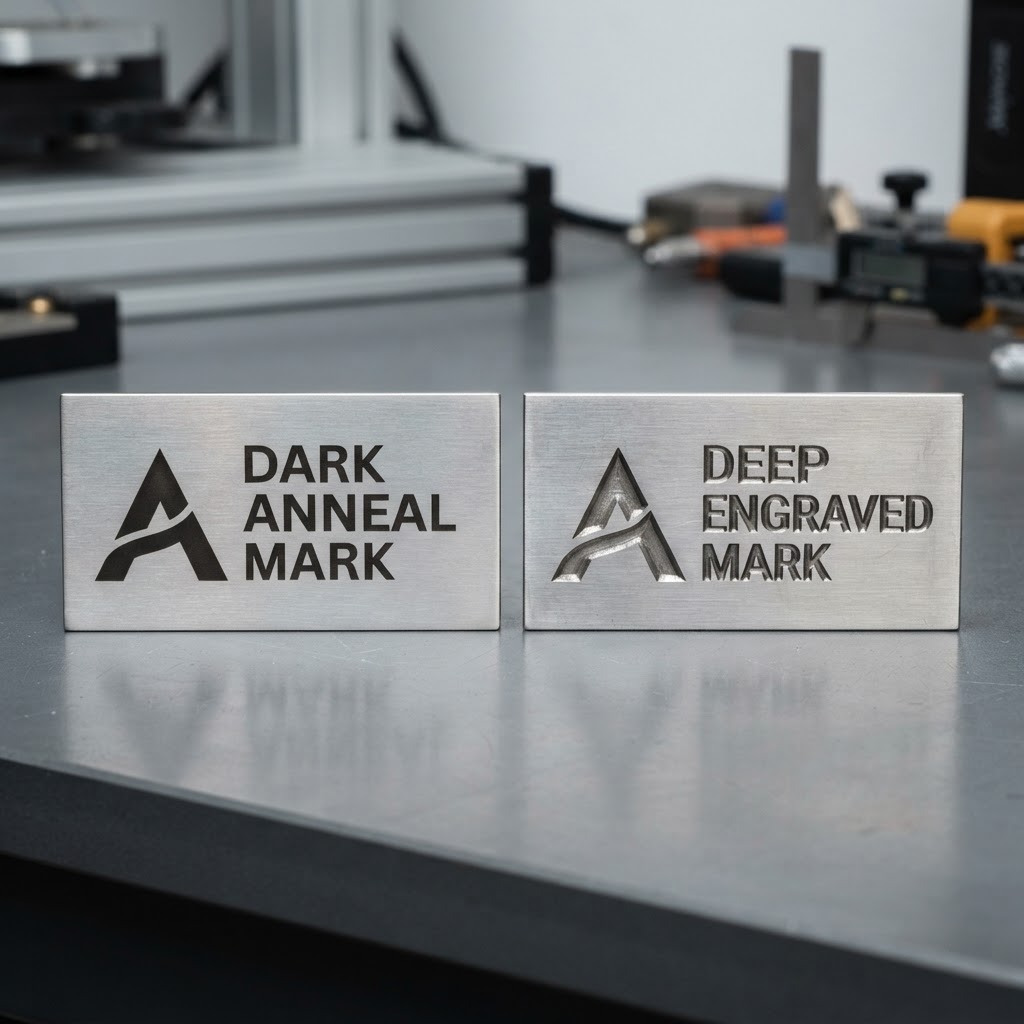
When most people think of marking metal, they think of engraving. Think of it like carving your initials into a tree. We use a high powered laser to actually vaporize and remove material from the surface of your metal part. You get a deep, tactile feel that you can easily run your fingernail over.
Here is the catch. Engraving leaves a physical cavity. If you are marking medical tools, food processing equipment, or anything that needs to be scrubbed or sanitized, you are creating a perfect little home for bacteria and grime to hide in. Plus, if you are working with thin metal, you are literally cutting a trench into the structural integrity of your piece. We do a lot of custom work here, and engraving is fantastic if you want something to look bold or if you are doing heavy duty industrial tags that need to be readable after years of abuse. But for precision parts or high end stainless, it is often overkill.
Why annealing is the secret weapon
Now, let us talk about anneal marking. This is the stuff that looks like magic, but it is actually just smart science. When we perform anneal marking, we are not removing any metal at all. We are using the laser to heat the surface of the metal, specifically stainless steel, just enough to change its molecular structure.
We are basically oxidizing the chromium in the steel to create a dark, permanent mark that stays right on the surface. Because we are not digging into the metal, the surface stays smooth. It is still just as strong as it was before we touched it, and there is nowhere for debris to collect. Honestly, this is why the medical and aerospace industries prefer it. It is clean, it is dark, and it is impossible to wear off because it is part of the metal itself. If you run your hand over an annealed mark, you will not feel a thing. It looks like it was printed on there with a high tech printer, but it is actually etched into the chemical makeup of the steel.
Which one do you actually need
Look, it comes down to how your parts are going to live their lives. If you are making a metal sign for a client in New Braunfels or a commemorative plaque that needs to stand out from across the room, go with engraving. The depth creates shadows, and it gives you that classic, high quality look that people expect from a custom shop. It catches the light beautifully, and it lasts forever.
If you are dealing with parts that need to pass strict cleanliness standards or parts that are small and need tiny, crisp text that doesn't mess with the overall profile, anneal marking is your best bet. We see a lot of folks from the manufacturing sector around Central Texas who come to us worried that laser marking will ruin their tight tolerances. When I show them an annealed sample, they usually breathe a huge sigh of relief. It is smooth, it is dark, and the part is still perfect to the thousandth of an inch.
Common mistakes we see in the shop
The biggest mistake people make is assuming that all metal reacts the same way. We have spent years fine tuning our equipment here at Perfect Etch to know exactly how different alloys behave under the laser. You cannot just throw a piece of aluminum in the machine and expect an anneal mark to show up. Annealing is specific to materials that have chromium, like stainless steel.
If you try to anneal aluminum, you are just going to heat it up and ruin the finish. For aluminum, we use specialized marking sprays or we switch over to engraving or laser ablation. You have to know your material. That is why we usually ask to see a sample before we commit to a full production run. We have seen too many projects go sideways because someone guessed the alloy type or tried to force an engraving setting on a part that needed a delicate touch.
Another thing to keep in mind is contrast. If you want a mark that is easy to read, the finish of the metal matters. A brushed stainless finish gives you a totally different look than a mirror polished piece. We are always happy to run a few test marks on a piece of scrap material for you so we can see how the metal reacts before we start on your actual inventory. It saves everyone a headache and ensures the final product looks exactly like you imagined.
If you have got a box of parts waiting to be marked, or you are just trying to figure out if your current design is going to work with your material, give us a shout or swing by the shop. We would love to take a look at your project and help you decide whether engraving or annealing is going to give you that clean, professional result you are looking for.
Tell us about your project
Share the basics and we will come back with pricing, options and a timeline. No obligation.