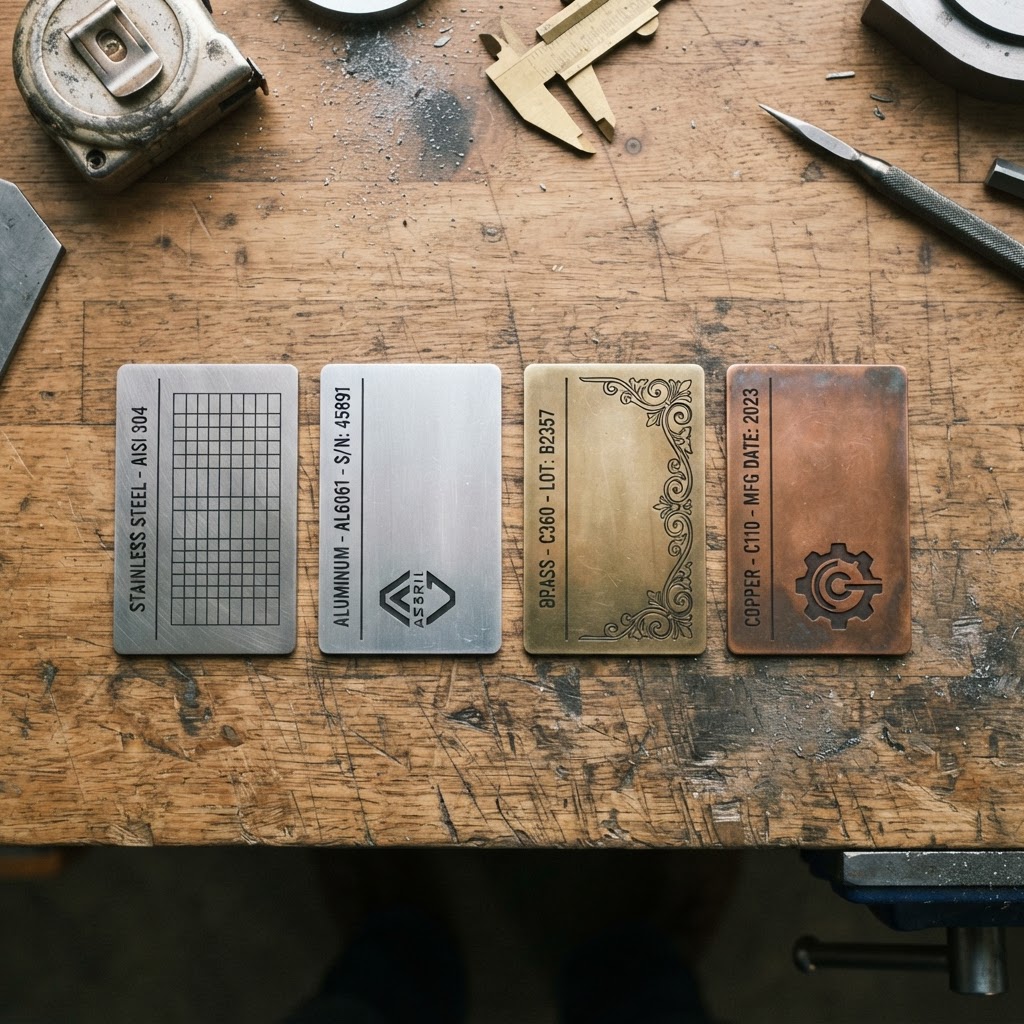
What Kind of Metal Can You Actually Engrave? A Material Guide
Need this made for your team?
Send your artwork or idea and we will come back with a price in one business day. Bulk pricing available.
What Kind of Metal Can You Actually Engrave? A Material Guide
I remember a customer walking into our shop here in New Braunfels a few months back. They brought in a random piece of metal they found in their garage, hoping we could turn it into a custom sign for their barn. They looked at me with this hopeful grin and asked if I could zap a logo onto it. I had to break the news that what they had was actually some kind of mystery alloy that would probably just smoke and ruin the lens of our machine rather than give us a clean etch. It happens more often than you think. People assume a laser is a magic wand that works on everything, but physics has a few things to say about that.
When you are looking into metal engraving materials, you quickly realize that not all metals play nice with lasers. If you have been searching for what metals can be laser engraved, you are in the right place. We have spent years fine tuning our process at Perfect Etch, and we have learned the hard way which metals look like a million bucks and which ones just turn into a mess.
The workhorse of our shop is stainless steel
Honestly, if I could engrave stainless steel all day long, I would be a happy guy. It is the absolute gold standard for laser engraving. Whether we are doing custom drinkware for a local wedding or marking industrial parts for a company here in Central Texas, stainless steel is our best friend. When you hit stainless with a fiber laser, the reaction is clean and permanent. It creates that sharp, dark contrast that everyone loves.
You see it on those insulated tumblers that are everywhere now. We take that raw stainless, and the laser changes the surface properties just enough to leave a crisp mark that won't fade or peel off, even if you run it through the dishwasher a thousand times. If you are ordering a metal sign for your office or a gift for a buddy, stainless steel is usually the smartest play. It does not rust, it is tough as nails, and it looks professional every single time.
Aluminum is a different beast entirely
Then you have aluminum. A lot of folks ask if we can engrave it, and the answer is yes, but it behaves differently than steel. Pure aluminum is actually pretty reflective. If you point a laser at it, the metal just wants to bounce the beam right back into the machine, which is a fast way to blow out some expensive hardware. Because of that, we usually work with anodized aluminum.
Anodizing is a process that adds a layer of color or finish to the aluminum, which makes it much easier for the laser to bite into. When we engrave anodized aluminum, we are usually just vaporizing that top layer to reveal the raw metal underneath. The result is a really sleek, high-contrast look. We use this a lot for custom tags, metal signs, or specific equipment labels where weight matters. Aluminum is light, easy to work with once it is anodized, and it handles the Texas heat better than just about anything else.
The trickier metals that make us nervous
Now, let's talk about the metals that make us pause. Brass and copper are gorgeous, but they are notoriously finicky. They are highly conductive and very reflective. If you bring us a piece of raw copper, we have to be extremely careful with our settings. If the power is too low, nothing happens. If the power is too high, the laser might just melt the edges or create a weird, uneven texture that looks like a mistake.
Look, we have pulled off some incredible brass projects, but it takes time. We have to use specific coatings or adjust our pulse settings to get that deep, rich look without wrecking the material. If you have a family heirloom made of brass or copper that you want to personalize, just know that it requires a steady hand and a lot of testing. We do not just slap it on the machine and hope for the best. We do a test burn on a scrap piece first because there are no second chances with heirlooms.
Why the finish matters more than you think
Here is the thing about laser engraving that people often overlook. It is not just about the type of metal. It is about the surface. A polished, mirror-like finish is a headache for a laser because it scatters the energy. A matte or brushed finish is usually a dream. When the surface has a bit of texture, the laser can grab onto it more effectively.
If you are planning a project, consider the finish of the metal before you commit. We have seen signs that looked great in concept but were nightmare projects because the metal was so polished it felt like trying to engrave a mirror. If you are sourcing metal for a sign, go for a brushed finish if you want that classic look. It hides minor scratches, it shows off the engraving perfectly, and it tends to hold up better in the long run.
Avoiding the dangerous stuff
I have to mention this because it is important for safety. We occasionally get people asking us to engrave things like chrome plated materials or mystery scrap metals. Chrome is a big no for us because the plating can flake off or release nasty fumes when it gets hit with a laser. If it is not clearly marked, we generally stay away from it. We want your custom sign to look great, but we also want to keep our shop air clean and our machine in one piece. If you are not sure what your metal is, send us a photo or drop by the shop. We have seen enough metal over the years that we can usually spot the good stuff just by how it feels.
We really enjoy helping people turn an idea into something tangible. Whether you are looking to mark a set of tools so they do not go missing or you need a custom sign for your front gate, knowing your materials makes the whole process smoother. You do not have to be an expert in metallurgy to get a great result. That is what we are here for. Just come by the shop or give us a shout if you have an idea in your head and you are wondering if it can actually be engraved. We will be honest with you about whether it will work or if we should try a different approach.
Tell us about your project
Share the basics and we will come back with pricing, options and a timeline. No obligation.