How Laser Engraving Actually Works: A Shop Owner's Plain-English Explanation
Need this made for your team?
Send your artwork or idea and we will come back with a price in one business day. Bulk pricing available.
How Laser Engraving Actually Works: A Shop Owner's Plain-English Explanation
People walk into our shop here in New Braunfels all the time, holding a Yeti tumbler or a heavy piece of steel, and they ask the same question. They want to know how we take a plain surface and turn it into something permanent. They usually expect some sci-fi answer involving giant mirrors and burning things to a crisp. Honestly, the truth is much cooler, but it is a lot more precise than people think. You don't need a physics degree to understand how laser engraving works. You just need to think of it like a very fast, very focused paintbrush made of light.
The basic idea behind the beam
Think about how a magnifying glass works on a sunny day. If you hold it just right, you focus all that scattered sunlight into one tiny, intense dot. That dot gets hot enough to burn a leaf or a piece of paper. Now, imagine taking that concept and turning the intensity up by a few thousand degrees. That is the heart of the laser engraving process.
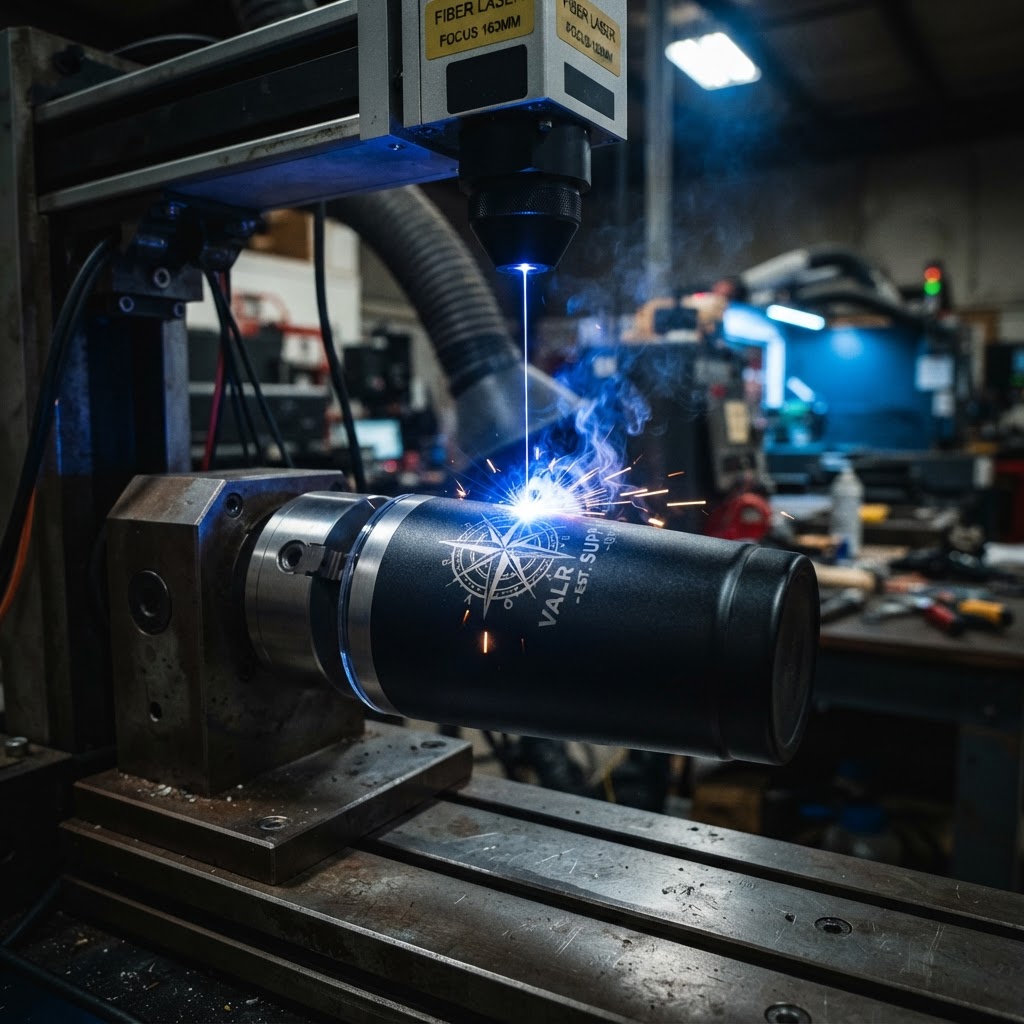
At Perfect Etch, we use sophisticated machines that direct a beam of light onto the material. The magic happens because that beam is controlled by a computer. We tell the software exactly what design or text we want, and the computer guides the laser head to move back and forth across the surface at lightning speed. It isn't just one big burn. It is thousands of tiny little pulses of energy hitting the material, etching away a microscopic layer of the surface to reveal the design underneath.
Why fiber lasers are the gold standard for metal
You might hear people talk about different kinds of machines, but here in our shop, we rely heavily on fiber laser engraving. If you are doing wood or leather, you might see a CO2 laser. Those are great, but for the metal work we do for our customers across Central Texas, the fiber laser is the king of the hill.
The fiber laser creates a beam that is perfectly suited for metal surfaces. It creates a wavelength that metal absorbs incredibly well. When that light hits something like stainless steel or aluminum, it doesn't just melt it. It changes the surface properties. This allows us to get those deep, crisp, permanent marks that don't fade, wash off, or chip away. Whether we are marking serial numbers on industrial parts or putting a family name on a custom metal sign, the fiber laser is why the mark stays clear for decades. It is precise enough that we can engrave letters so small you practically need a magnifying glass to read them, yet it is strong enough to leave a permanent impression on hardened steel.
What is actually happening to your stuff
One common misconception is that we are adding ink or painting the design onto your items. People see a black logo on a silver tumbler and assume we printed it. That isn't what happens at all. When we engrave metal, we are actually removing a tiny amount of material, or we are manipulating the oxide layer to create a permanent color shift.
Think of it like carving into a piece of wood, but on a scale so small it feels like magic. Because we are removing material or changing the chemistry of the top layer, the design is literally part of the object now. You cannot scratch it off with your fingernail. You cannot scrub it off with a sponge. It is there as long as the metal is there. This is why we tell people that if you want a custom sign for your ranch or a tumbler that can survive a trip down the Comal River, laser engraving is the only way to go. It is durable. It is clean. And it looks professional every single time.
The precision part of the job
People often ask if we ever mess up a piece. Look, we have been doing this a long time, but we take every single job seriously. The calibration process is the secret sauce. Before we hit the button, we have to account for the thickness of the metal, the type of coating on a drinkware item, and the specific finish of the surface.
For instance, engraving a powder-coated cup requires a different level of power than raw stainless steel. If we use too much power, we might cut too deep and ruin the integrity of the item. If we use too little, the design won't show up clearly. It is a balancing act of speed, power, and focus. We spend a lot of time testing on scrap pieces before we ever touch a customer's item. We know how much those custom pieces mean to you, so we make sure our settings are dialed in before the laser ever fires.
Getting the result you want
If you are thinking about bringing us a project, you don't need to worry about the technical details. You don't need to know the pulse frequency or the hatch spacing. All you really need is a clear idea or a good file of your logo. We handle the heavy lifting of figuring out how the laser needs to interact with your specific piece of metal. Whether it is a batch of industrial parts that need identification or a single gift that needs a personal touch, we treat it with the same level of care.
The coolest part of this job is seeing the moment someone sees their design appear on the metal for the first time. It is a clean, sharp, and permanent transformation that changes a plain piece of metal into something that tells a story. If you have an idea for a custom project or you are just curious if we can mark a specific type of metal, feel free to swing by the shop. We are always happy to show you how it works and see if we can bring your vision to life.
Tell us about your project
Share the basics and we will come back with pricing, options and a timeline. No obligation.