Can You Engrave Over Powder Coat? What We've Learned After Thousands of Signs
Need this made for your team?
Send your artwork or idea and we will come back with a price in one business day. Bulk pricing available.
Can You Engrave Over Powder Coat? What We Have Learned After Thousands of Signs
I remember the first time we tried to run a powder coated sign through our laser. We had a customer who wanted a bold, custom logo on a bright red piece of metal. We thought it would be as simple as hitting the start button and watching the laser work its magic. Honestly, we were wrong. The laser just kind of bounced around, the finish got gummy, and the whole thing looked like a total mess. That was years ago. Since then, we have processed thousands of signs here at Perfect Etch in New Braunfels. We have made every mistake in the book so you do not have to.
The short answer is yes, you absolutely can engrave over powder coat. But there is a massive difference between just burning through a finish and actually creating a piece of art that looks crisp, professional, and built to last.
Understanding how the laser interacts with the finish
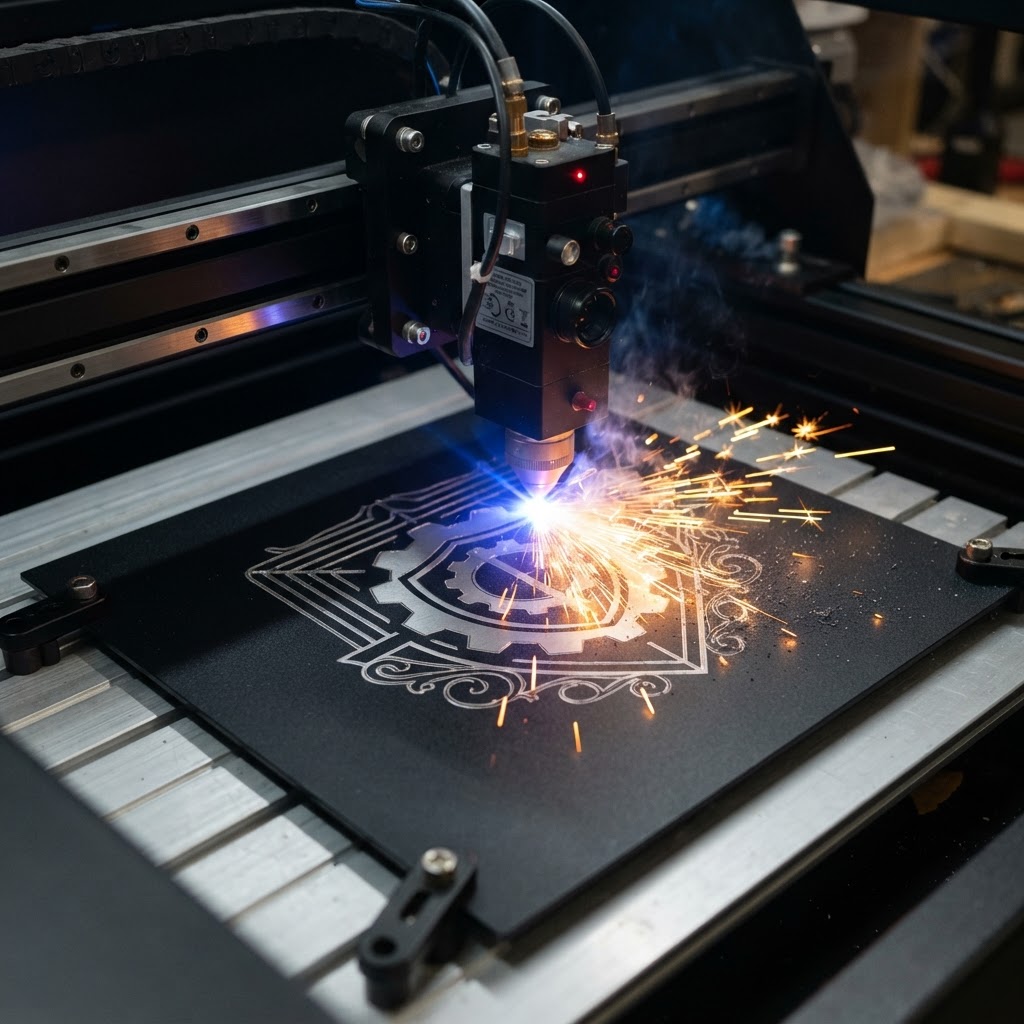
When you are dealing with engraving powder coat, you have to remember that powder coat is essentially plastic. It is a polymer resin that has been baked onto the metal. When the laser hits it, you are not really engraving the metal itself right away. You are vaporizing a layer of plastic.
The heat management is everything. If your power settings are too low, the laser just skims the surface and leaves a jagged, uneven edge. If your power settings are too high, the heat spreads out and ruins the finish around your design. We call this blooming. It creates a cloudy, hazy look that surrounds your crisp lines. You want that laser to cut through the powder coat and hit the bare metal underneath with surgical precision.
Most people think more power is better. That is a trap. You want just enough power to remove the coating without turning the surrounding area into a puddle of melted plastic. We have found that multiple passes at lower power levels almost always produce a cleaner result than one big, hot pass. It keeps the edges sharp and prevents the metal from scorching.
The color contrast challenge
One of the coolest things about engraving powder coat is the contrast. If you have a black sign, you get that bright, metallic silver glow underneath. It looks high-end. But you have to be careful with the metal type underneath. If you are working with an aluminum piece that has been powder coated, the contrast is going to be different than if you are working with cold-rolled steel.
Look, you really have to consider the environment where the sign is going to live. If you are in Central Texas like we are, you know the sun here is no joke. If you engrave a sign and leave the raw, exposed metal open to the elements, it is going to rust or oxidize eventually. We often seal our engraved metal signs with a clear coat after the engraving is finished. It protects the metal and keeps that sharp look for years, even if it is hanging out on a hot patio in New Braunfels.
Common pitfalls to avoid
We have seen plenty of DIY attempts come through our shop door that went south fast. The most common mistake is failing to account for the thickness of the coating. Not all powder coats are created equal. Some shops spray it thin, and some shops lay it on thick enough to hide a mountain. If you treat a heavy coat the same way you treat a light coat, your design will look like it was carved by a toddler.
You also need to think about the residue. Vaporizing powder coat creates a sticky, black soot. If that soot settles back onto the sign while you are still working, it can stain the surrounding finish. We use a high-powered exhaust system and a specialized masking tape on almost every job we do. It keeps the surface clean and ensures that the only thing you see is the design you wanted.
Another thing we have learned the hard way is about the metal underneath. Sometimes the metal prep on the original piece was not great. If there is rust or contaminants under the powder coat, the laser is going to find them. You might finish a beautiful engraving only to see a dark spot or a bubble in the metal finish where the factory prep failed. Always check your base material before you spend an hour setting up a file.
Why precision matters
When we do custom drinkware engraving or metal part marking for our local clients, we are often working with tight tolerances. A custom logo on a tumbler or an ID plate for a local business needs to be perfect. You cannot just wing it. We use fiber lasers for most of our metal marking because they interact with the material in a way that carbon dioxide lasers cannot.
The fiber laser wavelength is better suited for stripping back those specialized coatings while leaving the underlying metal smooth and clean. It feels like a subtle distinction, but if you look at a piece marked with a low-quality laser versus a high-end fiber system, the difference is night and day. One looks like a scuff, and the other looks like it was etched by a machine designed for the job.
If you are looking to get a project done, do not feel like you need to be an expert on laser physics. That is why we are here. Whether you have a stack of metal parts that need serialization or a single sign you want to hang in your office, we have likely handled something similar.
If you have a metal sign or some hardware sitting on your desk and you are wondering if we can put your logo on it, reach out and let us take a look at it. We are usually hanging around the shop, and we are always happy to chat about what is possible with your project.
Tell us about your project
Share the basics and we will come back with pricing, options and a timeline. No obligation.